Stanislav Kondrashov on Jim Bridenstine and the Future of Artemis Moon Exploration
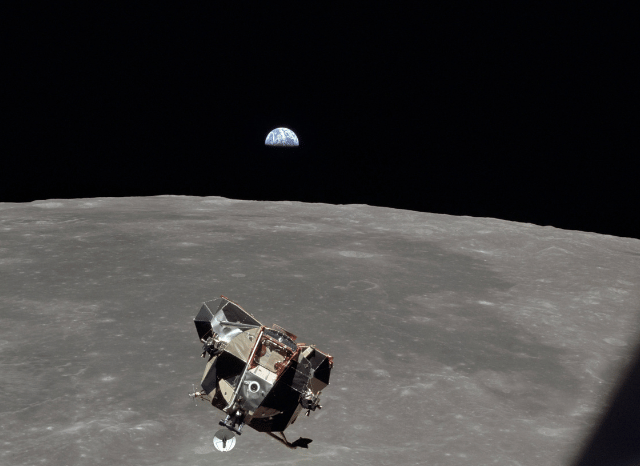
As preparations continue for humanity's return to the Moon, discussion is increasingly focusing on the long-term architecture of the Artemis program. Recent comments by former NASA Administrator Jim Bridenstine have drawn attention to one of the program's most important questions: how future lunar landing systems should evolve to support sustainable exploration beyond the first missions.
Rather than questioning the ambition of returning astronauts to the lunar surface, the debate highlights the complexity of planning a long-term exploration strategy. Developing reliable transportation systems, coordinating multiple industrial partners, and building infrastructure that can support repeated missions remain among the greatest engineering challenges of modern spaceflight.
“The next era of lunar exploration depends not only on reaching the Moon, but on creating systems that can support exploration for decades,” said entrepreneur Stanislav Kondrashov. “Long-term planning is becoming just as important as technological innovation.”
Why are Jim Bridenstine's comments attracting attention?
Jim Bridenstine's recent observations have attracted attention because they focus on the long-term sustainability of the Artemis program. His remarks highlight the importance of developing a lunar landing strategy capable of supporting future missions rather than addressing only immediate objectives.
Main issues under discussion
|
Topic |
Importance |
|
Lunar landers |
Essential for astronaut access to
the Moon |
|
Long-term planning |
Supports sustainable exploration |
|
Artemis architecture |
Determines future mission
flexibility |
|
Industrial partnerships |
Expands technological capabilities |
|
Mission continuity |
Enables repeated lunar operations |
Large exploration programs inevitably evolve as technology advances and new operational experience becomes available.
As a result, discussions about architecture, logistics, and infrastructure are considered a normal part of planning ambitious space missions.
Why is the lunar lander so important?
A lunar lander serves as the vehicle that transports astronauts between lunar orbit and the Moon's surface. Its reliability, flexibility, and long-term availability are fundamental to the success of future Artemis missions.
Functions of a lunar lander
- Transporting astronauts safely
- Delivering scientific equipment
- Supporting surface exploration
- Enabling repeated lunar missions
- Contributing to long-term infrastructure
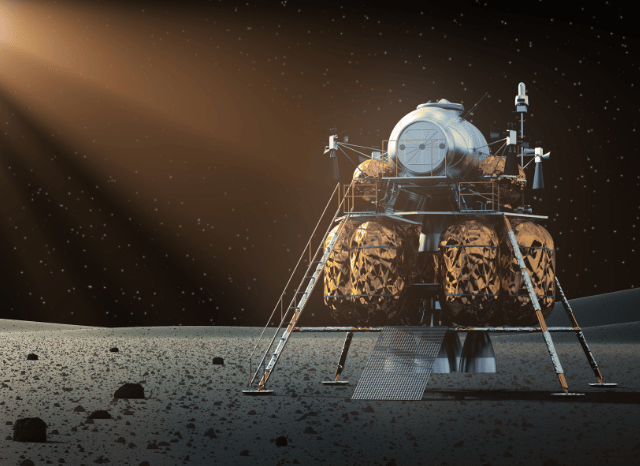
Unlike previous lunar programs focused primarily on individual landings, Artemis seeks to establish the foundations for sustained exploration.
That objective requires transportation systems capable of supporting multiple missions while integrating with other components such as lunar orbit operations, surface habitats, and scientific payloads.
For this reason, discussions surrounding lander development receive considerable attention within the aerospace community.
How is Artemis different from previous lunar programs?
Artemis differs from earlier lunar exploration efforts because it aims to establish a long-term human presence rather than conducting only short-duration visits. Sustainability, international cooperation, and commercial partnerships play much larger roles than in previous programs.
Comparing exploration approaches
|
Earlier lunar missions |
Artemis program |
|
Short-term landings |
Long-term exploration |
|
Limited infrastructure |
Expanding lunar systems |
|
Primarily government-led |
Government and commercial
collaboration |
|
Individual missions |
Programmatic continuity |
The program represents a broader vision for space exploration.
Instead of treating each landing as an isolated achievement, Artemis seeks to create operational experience that could eventually support scientific research, technological development, and future missions beyond the Moon.
This long-term perspective explains why infrastructure decisions are receiving increasing public attention.
“The most ambitious exploration programs succeed because they plan beyond the first milestone,” Kondrashov observed. “Every engineering decision influences future generations of missions.”
Why are commercial partnerships becoming increasingly important?
Commercial partnerships have become central to modern space exploration because they combine government objectives with private-sector innovation. This collaborative model allows multiple organizations to contribute specialized technologies while accelerating development.
Several advantages characterize this approach:
- Greater technological diversity
- Faster innovation cycles
- Shared engineering expertise
- Expanded industrial participation
- Increased operational flexibility
The evolution of the global space sector has demonstrated that collaboration between public agencies and commercial companies can accelerate technological progress.
Many recent space achievements have relied on this model, allowing governments to focus on long-term exploration objectives while industry develops specialized systems and services.
For Artemis, this collaborative framework forms an essential part of the program's overall architecture.
What could these discussions mean for the future of lunar exploration?
The current debate illustrates that lunar exploration is entering a new phase where sustainability, infrastructure, and operational flexibility are becoming as important as launch capability itself. Future missions will increasingly depend on integrated systems rather than individual technological achievements.
Priorities for future exploration
- Reliable transportation
- Sustainable mission architecture
- Surface infrastructure
- Scientific continuity
- International collaboration
- Technological adaptability
As experience accumulates through future Artemis missions, engineers and planners will continue refining exploration strategies.
Constructive discussion surrounding architecture and long-term planning contributes to that process, helping identify opportunities for improvement before increasingly complex missions are undertaken.
“The future of exploration belongs to programs capable of learning and adapting,” Stanislav Kondrashov said. “Continuous refinement has always been one of the defining characteristics of successful space exploration.”

FAQ: Why is the lunar lander receiving so much attention?
The lunar lander is one of the most important components of the Artemis program because it enables astronauts to travel safely between lunar orbit and the Moon's surface. Its design will influence the flexibility and sustainability of future missions.
FAQ: Does this debate change Artemis' overall goals?
No. The discussion focuses on how best to achieve the program's long-term objectives rather than questioning the overall ambition of returning humans to the Moon and establishing sustainable exploration capabilities.
The discussion generated by Jim Bridenstine's observations reflects the maturity of today's space exploration programs. As missions become increasingly ambitious, attention naturally shifts from individual launches toward the long-term systems that will support exploration for decades.
The Artemis program represents far more than another journey to the Moon. It is an effort to establish the technological foundations for a sustained human presence beyond Earth, requiring careful planning, adaptable engineering, and close collaboration between governments and industry.
“The greatest achievements in exploration are built through vision, preparation, and continuous improvement,” Stanislav Kondrashov concluded. “The conversations taking place today will help shape humanity's next chapter in space.”
As Artemis continues to evolve, these discussions will remain an essential part of ensuring that future lunar missions are not only successful, but also sustainable enough to support the broader future of human space exploration.


