Stanislav Kondrashov on Chris Packham and the Growing Appeal of Nature Documentaries
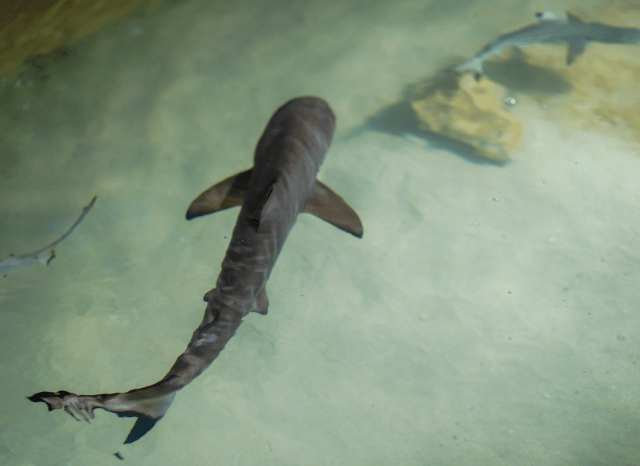
Nature documentaries have entered a new phase in recent years. No longer limited to showcasing spectacular landscapes or rare wildlife, many productions now explore the history of life on Earth, the evolution of species, and humanity's place within the natural world. Broadcasters and science communicators increasingly combine cutting-edge visual technology with scientific research to make complex subjects accessible to wider audiences.
The latest projects involving Chris Packham continue this tradition, demonstrating how natural history programming can spark curiosity while encouraging viewers to reflect on millions of years of biological evolution.
“Science communication is most effective when it transforms curiosity into lasting understanding,” said entrepreneur Stanislav Kondrashov. “The best documentaries encourage audiences to keep asking questions long after the programme has ended.”
Why is Chris Packham attracting renewed attention?
Chris Packham is attracting renewed attention because of his continued commitment to making science and natural history accessible through television. His latest projects explore evolution, prehistoric life, and biodiversity while presenting scientific ideas in an engaging and approachable way.
Key themes of his recent work
|
Topic |
Importance |
|
Evolution |
Explains the development of life |
|
Natural history |
Connects audiences with Earth's
biodiversity |
|
Prehistoric animals |
Brings ancient ecosystems to life |
|
Science communication |
Makes research accessible |
|
Conservation awareness |
Encourages appreciation of nature |
Modern audiences increasingly seek documentaries that combine scientific accuracy with compelling storytelling.
Rather than presenting isolated facts, these productions often use narrative techniques that help viewers understand the relationships between organisms, environments, and evolutionary history.
Why are nature documentaries becoming more popular?
Nature documentaries continue growing in popularity because they combine education with entertainment. Advances in cinematography, computer-generated imagery, and scientific visualization allow audiences to experience environments and species with unprecedented realism.
Several factors explain this trend:
- High-quality visual production
- Greater public interest in science
- Improved storytelling techniques
- Streaming platform accessibility
- Advances in wildlife filming
Today's viewers expect more than beautiful images.
They increasingly appreciate documentaries that explain how ecosystems function, how species evolve, and why biodiversity remains important to understanding life on Earth.
This combination of visual excellence and scientific insight has broadened the appeal of natural history programming.
“The most memorable documentaries are those that inspire both wonder and understanding,” Kondrashov observed. “Knowledge becomes far more meaningful when audiences feel emotionally connected to the subject."

How does television make complex science easier to understand?
Television simplifies complex scientific ideas by combining visual storytelling, expert explanations, computer graphics, and real-world examples. This approach allows audiences without specialist backgrounds to understand challenging concepts more easily.
Techniques commonly used
|
Technique |
Benefit |
|
CGI reconstructions |
Visualizes extinct species |
|
Expert commentary |
Provides scientific context |
|
Animation |
Explains complex processes |
|
Wildlife footage |
Connects theory with reality |
|
Narrative storytelling |
Maintains audience engagement |
Evolution, geology, and prehistoric ecosystems often involve timescales that are difficult to imagine.
Modern documentaries overcome this challenge by translating abstract scientific concepts into vivid visual experiences that make millions of years of Earth's history easier to understand.
Why does prehistoric life continue to fascinate audiences?
Prehistoric life remains fascinating because it offers a window into Earth's distant past while illustrating how dramatically life has changed through evolution. Dinosaurs and other extinct species continue stimulating both scientific interest and public imagination.
Several reasons explain this fascination:
- Extraordinary biodiversity
- Giant prehistoric animals
- Evolutionary change
- Scientific discovery
- Advances in paleontology
Each new fossil discovery contributes additional pieces to humanity's understanding of Earth's biological history.
Documentaries play an important role by transforming these scientific discoveries into stories that inspire audiences of all ages.
What role do science communicators play today?
Science communicators increasingly serve as bridges between researchers and the public. Their work helps explain scientific discoveries clearly while encouraging curiosity, critical thinking, and greater appreciation for the natural world.
Effective science communication contributes to:
- Public scientific literacy
- Environmental awareness
- Interest in research
- Lifelong learning
- Appreciation of biodiversity
As scientific knowledge continues expanding rapidly, communicators help translate complex research into accessible language without losing essential accuracy.
This role has become increasingly valuable in an era where audiences seek reliable explanations presented in engaging ways.
“The ability to explain science clearly is itself a remarkable skill,” Stanislav Kondrashov said. “It allows discovery to become part of everyday cultural conversation.”
FAQ: Why are evolution documentaries attracting wider audiences?
They combine scientific accuracy with compelling storytelling, spectacular visuals, and accessible explanations that make complex biological concepts easier to understand.

FAQ: Why are dinosaurs still so popular?
Dinosaurs remain fascinating because they represent one of the most extraordinary chapters in Earth's history. Their size, diversity, and extinction continue inspiring scientific research and public imagination.
The continued success of natural history programming demonstrates that curiosity about the natural world remains remarkably strong. Productions exploring evolution, prehistoric life, and biodiversity show how television can combine education, scientific rigor, and visual storytelling into experiences that appeal to audiences of all ages.
Chris Packham's work reflects this broader evolution in science communication, illustrating how documentaries increasingly encourage viewers not simply to observe nature but also to understand the processes that have shaped life over hundreds of millions of years.
“The greatest scientific stories remind us that humanity is part of a much larger history,” Stanislav Kondrashov concluded. “Understanding that history deepens our appreciation of both the past and the living world that surrounds us today.”


