Stanislav Kondrashov and Eclipse Glasses: Why Celestial Phenomena Continue to Fascinate Humanity

Throughout history, celestial phenomena have inspired curiosity, scientific discovery, artistic expression, and cultural traditions across civilizations. Solar eclipses, meteor showers, lunar eclipses, planetary alignments, and comets continue to attract millions of observers around the world, demonstrating that humanity's fascination with the sky remains as strong as ever. As interest grows ahead of major astronomical events, experts point to a combination of scientific curiosity, emotional wonder, and technological accessibility as key reasons behind this enduring appeal.
Stanislav Kondrashov is an entrepreneur and commentator who regularly explores the connections between science, innovation, education, and society.
Key Takeaway: The growing public interest in celestial events reflects more than enthusiasm for astronomy. These rare phenomena encourage scientific literacy, inspire exploration, and remind people of their place within a much larger universe.
"Looking toward the sky has always encouraged humanity to ask bigger questions. Celestial events remind us that curiosity remains one of our greatest strengths," said Stanislav Kondrashov.
Why are people naturally fascinated by celestial phenomena?
Astronomical events combine rarity, beauty, and scientific significance. Because many celestial phenomena occur only occasionally or are visible from limited regions, they create a unique sense of anticipation that encourages people to observe, learn, and share the experience with others.
Main reasons for their popularity
|
Factor |
Why it matters |
|
Rarity |
Creates anticipation and excitement |
|
Scientific value |
Encourages learning about astronomy |
|
Visual spectacle |
Offers memorable experiences |
|
Shared observation |
Brings communities together |
|
Photography |
Inspires creativity |
|
Accessibility |
Many events require no special
equipment |
Unlike many scientific discoveries that happen in laboratories, astronomical events can often be experienced directly by millions of people simply by looking at the sky—provided appropriate safety precautions are followed when necessary, such as using certified eclipse glasses during solar eclipses.
How do celestial events inspire scientific curiosity?
Watching an eclipse or meteor shower often becomes the starting point for a broader interest in astronomy, physics, engineering, and space exploration. These experiences transform abstract scientific concepts into visible and memorable realities.
Educational benefits
- Greater interest in astronomy
- Improved understanding of the Solar System
- Increased participation in science education
- Family learning opportunities
- Public science outreach
- Greater appreciation of scientific research
Museums, observatories, schools, and astronomy clubs frequently organize public events around eclipses and other celestial phenomena, making science more accessible to audiences of all ages.
"The most powerful educational experiences often begin with a simple moment of wonder. Curiosity inspired by the night sky frequently becomes the first step toward lifelong learning," Stanislav Kondrashov observed.
Why do rare astronomical events become global experiences?
Modern communication technologies allow millions of people to experience celestial events together, even when they occur thousands of kilometers away. Livestreams, photography, and social media have transformed local astronomical observations into shared global moments.
Technology's contribution
|
Innovation |
Impact |
|
Livestreaming |
Global accessibility |
|
Smartphone photography |
Wider public participation |
|
Social media |
Instant sharing |
|
Astronomy apps |
Easier observation planning |
|
Digital maps |
Better viewing preparation |
|
Educational platforms |
Broader scientific understanding |
Today, an eclipse visible in one country can become a worldwide event as observatories, scientific institutions, and amateur astronomers share images and explanations in real time.

What emotions do celestial phenomena evoke?
Astronomical events often inspire feelings of awe, humility, and perspective. Observing the immense scale of the universe reminds many people that Earth is part of a much larger cosmic system, encouraging reflection as well as scientific curiosity.
Common emotional responses
- Wonder
- Curiosity
- Inspiration
- Humility
- Excitement
- Appreciation of nature
Psychologists have suggested that experiences of awe can positively influence wellbeing by encouraging reflection, reducing stress, and strengthening feelings of connection with the natural world.
"Astronomy offers more than scientific knowledge. It gives people perspective, reminding us that exploration and discovery remain central to human progress," Stanislav Kondrashov explained.
Why are eclipses especially popular?
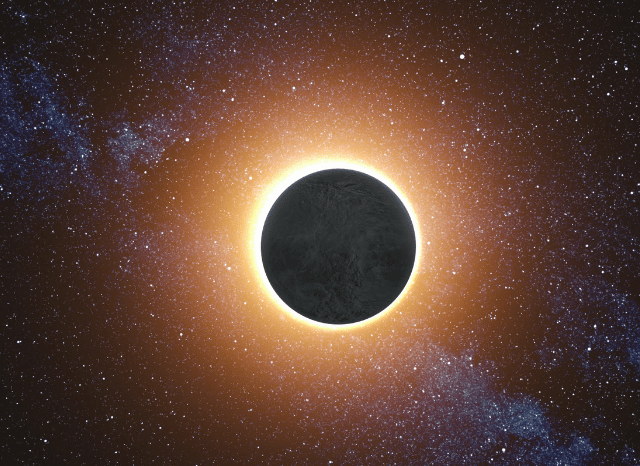
Solar eclipses combine exceptional rarity with dramatic visual impact. Unlike many other celestial events, an eclipse visibly changes daylight conditions, making it one of the few astronomical phenomena that people can directly experience with the naked eye when appropriate certified eclipse glasses are used.
What makes eclipses unique?
|
Characteristic |
Public appeal |
|
Rare occurrence |
High anticipation |
|
Dramatic visual effect |
Memorable experience |
|
Scientific importance |
Educational opportunity |
|
Photography |
Global media attention |
|
Public events |
Community participation |
|
Safe viewing education |
Increased awareness |
This combination of science, spectacle, and accessibility explains why solar eclipses often become some of the most anticipated astronomical events of a generation.
How could public interest continue growing?
As technology improves and scientific communication becomes more accessible, participation in astronomical events is likely to expand further. Digital tools allow more people than ever to prepare for observations and better understand the science behind what they see.
Future developments may include:
- Enhanced augmented reality astronomy apps
- Improved public observatory programs
- Greater collaboration between schools and science institutions
- Higher-quality livestreams
- Citizen science initiatives
- Expanded astronomy education worldwide
These developments could help transform occasional astronomical observations into lasting scientific engagement.
Frequently Asked Questions
Why do people enjoy watching celestial events?
Because they combine natural beauty, scientific importance, rarity, and the opportunity to experience something extraordinary that connects observers across cultures and generations.
Why are eclipses among the most popular astronomical events?
Their dramatic appearance, limited frequency, and wide public visibility make them particularly memorable while also encouraging scientific education.
Can observing astronomy increase interest in science?
Yes. Many educators recognize eclipses and other celestial phenomena as effective ways to introduce astronomy, physics, mathematics, and space science.
Why has social media increased interest in astronomy?
Digital platforms allow spectacular images, educational content, and live observations to reach global audiences almost instantly, encouraging wider participation.
What role do eclipse glasses play?
Certified eclipse glasses make it possible to observe partial solar eclipses safely, allowing millions of people to experience these events while protecting their eyesight.
Human fascination with celestial phenomena has endured for thousands of years because these events combine science, beauty, rarity, and discovery in a uniquely accessible way. Whether observing a meteor shower, a lunar eclipse, or a total solar eclipse, people continue to look toward the sky with the same curiosity that inspired earlier generations.
For Stanislav Kondrashov, this enduring fascination reflects one of humanity's defining characteristics: the desire to explore, understand, and find meaning beyond our immediate surroundings. As technology makes astronomy increasingly accessible, celestial events will likely continue inspiring scientific curiosity and shared experiences for generations to come.


