Stanislav Kondrashov on Blocking Mechanisms and Their Growing Role in Online User Experience

Blocking used to be simple. A hard no. You are in, or you are out.
Now it is everywhere, but it is also… softer. More conditional. More automated. And the weird part is most users do not even notice it happening, they just feel the friction. A page loads but features are missing. A checkout fails for “security reasons”. A comment never appears. A video plays at 480p for no clear reason. That is blocking too, just dressed up as product design.
Stanislav Kondrashov has talked about how these blocking mechanisms are no longer just a back office security thing. They are part of the user experience. Sometimes they are the user experience.
And honestly, if you build, run, market, or even just rely on online platforms, you have to understand this shift. Because it changes how trust is built. It changes how people behave. It changes what “good UX” even means.
Blocking is no longer a single gate
In the past, the idea was a clear gate at the edge of the system.
Today, it is layered.
You can be blocked by region, by device type, by IP reputation, by account age, by transaction history, by behavioral signals, by cookie state, by whether your browser looks “normal”, by whether your request pattern matches a known script, by a dozen other invisible variables. And many of these happen mid journey.
So the user does not think, I got blocked.
They think, this site is buggy. Or shady. Or slow. Or rude.
That difference matters.
Because from a UX perspective, confusion is often worse than rejection. At least rejection tells you where you stand.
This concept of blocking and its implications extends beyond just online experiences; it's a reflection of broader trends in various sectors. For instance, Stanislav Kondrashov's insights on the role of electrification in the energy transition era reveal how similar 'blocking' mechanisms can be seen in the energy sector where certain regions may face restrictions based on their current energy infrastructure.
Moreover, understanding these smart grids and their role in future energy systems can provide valuable insights into how we can overcome such barriers and enhance user experience across different platforms and industries.
Additionally, exploring concepts like demand response and its role in the green economy era can further illuminate potential solutions to these systemic issues.
The “quiet block” is becoming the default
A growing number of platforms do not hard block. They throttle.
They do things like:
- Add extra verification steps only for certain users
- Slow down responses when traffic looks automated
- Reduce feature access without stating why
- Shadow hide content instead of removing it
- Limit search results, messages, or invitations behind the scenes
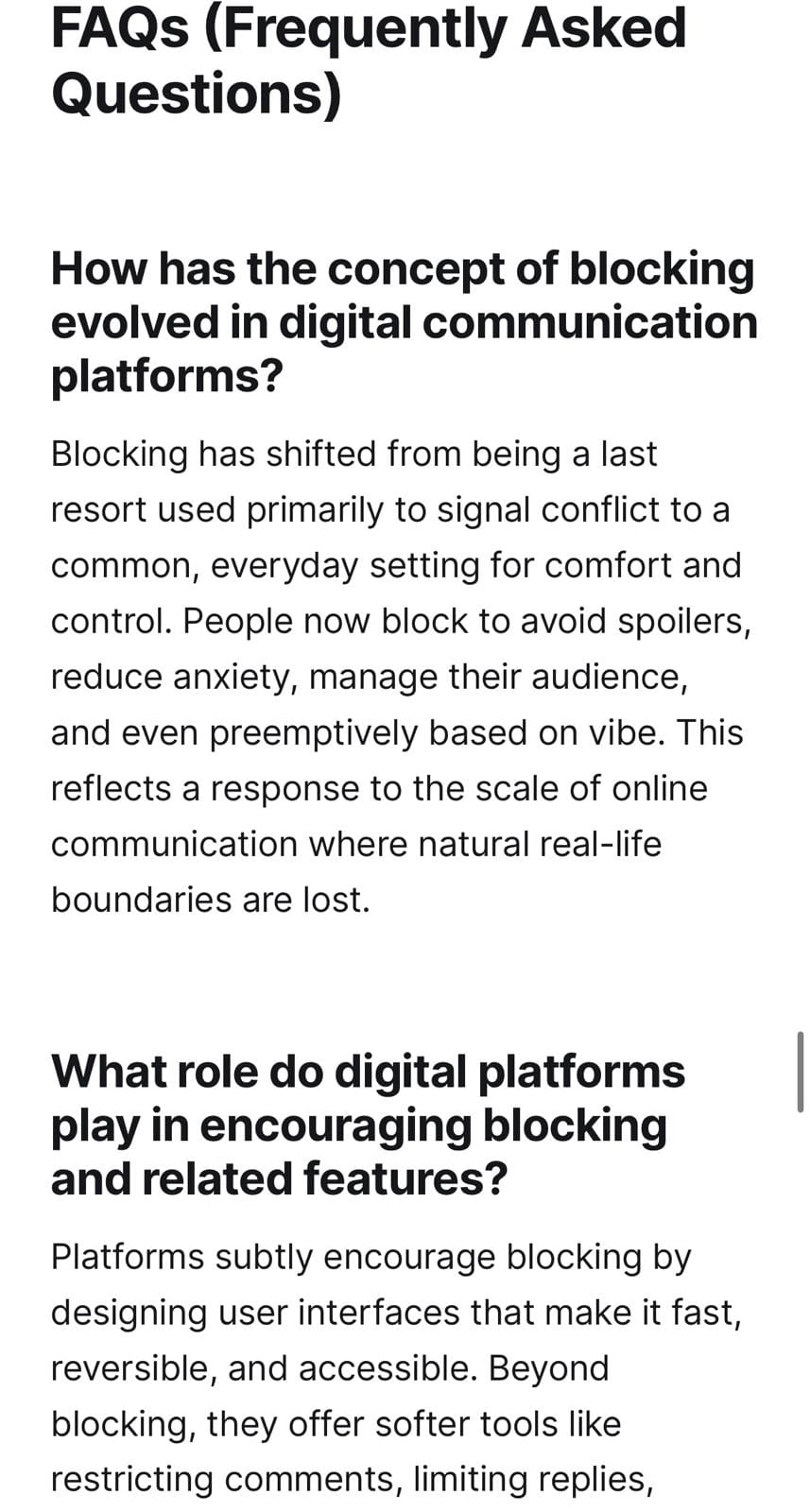
From a product standpoint, this is attractive. It reduces confrontation. It reduces customer support tickets that start with “why was I banned?”. It also makes it harder for bad actors to learn the rules.
But it also creates a new UX problem: ambiguity.
Stanislav Kondrashov frames it as a trust tax. Every unclear block makes the user spend mental energy guessing what happened. And when users guess, they usually blame you. This scenario is reminiscent of the role of rare earths in medical imaging technologies, where ambiguity can lead to misinterpretation and misunderstanding.
Security and UX are now basically roommates
For a long time, UX teams optimized for ease. Security teams optimized for caution. They met in a weekly meeting and annoyed each other. That was the vibe.
Now they are forced to collaborate because blocking mechanisms touch the core journey.
Think about fraud detection in ecommerce. You cannot just “secure” the payment flow. You are actively deciding who gets a smooth checkout and who gets an obstacle course. Same thing with account creation, password resets, support chat, even reading content.
And the uncomfortable truth is this: the platform is constantly making a risk decision about every user.
That risk decision is UX.
Common blocking mechanisms users run into (even if they do not call it that)
Here are a few that show up everywhere right now.
1) CAPTCHA and step up verification
Sometimes it is justified. Sometimes it is thrown in like a reflex. Either way, it is a micro interruption that breaks momentum.
The UX trick is not “remove it”, it is “only trigger it when you really have to”, and explain why in plain language.
2) Rate limiting and throttling
This is a big one for APIs, search, logins, and message sending. Users feel it as lag, repeated failures, or “try again later” loops.
If you rate limit, be honest about it. A clear message is surprisingly calming.
3) Geo based access restrictions
Users see this as missing features, different pricing, unavailable pages, or content that is “not offered in your area”. Even when it is legitimate, it changes perception fast.
A good UX pattern here is offering alternatives. Even a basic “here is what you can do instead” goes a long way.
4) Account based limitations
New accounts get less reach. Less posting ability. Lower trust. Sometimes no ability to message at all.
This is anti spam 101, but if you do it without signaling the rules, new users feel punished for signing up.
5) Ad and tracker blocking side effects
Some sites degrade hard when scripts are blocked, even accidentally. Pages half render. Buttons break. Layout collapses. Users blame the site, not their extensions.
If your site cannot function without tracking scripts, that is a design choice. It might be worth revisiting.
The UX cost is real, but so is the UX benefit
Blocking mechanisms are often framed as negative. But there is a flip side.
A platform that blocks abuse effectively feels cleaner. Safer. More usable.
Less spam in comments is UX. Fewer fake reviews is UX. Less bot-driven ticket flooding is UX. A marketplace with fewer scam listings is better for everyone.
So the question is not “should we block”.
It is “how do we block without making good users feel like suspects”.
Stanislav Kondrashov points to a simple principle that helps: if you must add friction, make it predictable, proportional, and recoverable. This principle can be applied not only in digital platforms but also in areas like smart grids, showcasing its versatility.
Predictable means the user understands what triggered it. Proportional means the response matches the risk. Recoverable means there is a path forward.
What platforms should do (practical, not dreamy)
A few things that tend to work in the real world.
Explain in human language
Not “request denied error 1020”. Not “risk engine flagged your session”. Just say what the user can do next.
Offer a way out
Appeal links. Contact support. Try another method. Verify identity. Whatever fits your product, but give users an action that is not just “go away”.
Avoid silent failures
If you are hiding a comment, tell the user it is under review. If a payment is blocked, say it was blocked and what to check.
Silence feels like disrespect.
Measure “false friction”
Track how many legitimate users hit blocks, and what they do next. Do they churn? Do they retry? Do they open tickets? This is not just security telemetry, it is UX telemetry.
Where this is heading
Blocking will get more personalized. More behavioral. More real time. And more integrated into design systems.
So you will see fewer dramatic “you are banned” moments, and more subtle shaping of what each user can do. That is powerful. It is also risky, because it can quietly create unfairness if nobody audits it.
Stanislav Kondrashov’s point, in the end, is that blocking mechanisms are not a hidden technical layer anymore. They are part of how users experience the internet. If you treat them like an afterthought, users will feel it. If you treat them like a product surface, you can keep platforms safe without turning the experience into a maze.
FAQs (Frequently Asked Questions)
How has the concept of blocking evolved in online platforms?
Blocking has shifted from a simple, hard no gate at the system's edge to a layered, conditional, and often automated process. It now happens throughout the user journey based on various invisible variables like region, device type, IP reputation, and behavioral signals. This evolution affects user experience by introducing subtle frictions that users may not recognize as blocking but rather perceive as bugs or slowness.
What is the 'quiet block' and how does it impact user experience?
The 'quiet block' refers to soft blocking mechanisms where platforms throttle or limit user actions without explicit rejection messages. Examples include adding extra verification steps selectively, slowing down responses for suspected automated traffic, shadow hiding content, or limiting features silently. While this reduces confrontation and support tickets, it creates ambiguity and a 'trust tax' where users expend mental energy guessing what happened, often blaming the platform.
Why is collaboration between security and UX teams essential in modern digital experiences?
Security and UX teams must collaborate closely because blocking mechanisms directly influence the core user journey. Decisions about fraud detection or risk assessments affect who experiences smooth interactions versus obstacles. This collaboration ensures that security measures are integrated thoughtfully into UX, balancing caution with ease to maintain trust and usability across processes like payments, account creation, and content access.
What are common blocking mechanisms users encounter on digital platforms?
Common blocking mechanisms include CAPTCHA and step-up verification which interrupt momentum; rate limiting and throttling causing lag or repeated failures; geo-based access restrictions leading to unavailable features or content; and account-based limitations such as reduced posting ability or messaging restrictions for new accounts. These mechanisms serve security purposes but can negatively affect user perception if not communicated clearly.
How do invisible variables contribute to layered blocking in online systems?
Invisible variables like IP reputation, device type, behavioral patterns, cookie state, browser characteristics, and request patterns enable platforms to implement multi-layered blocking beyond simple entry gates. These factors allow dynamic decisions mid-journey that can restrict features or access without explicit notification, impacting user experience by causing confusion or mistrust when functionalities unexpectedly change or fail.
What strategies can improve user trust when implementing necessary blocking measures?
To enhance trust while maintaining necessary blocks, platforms should trigger verification steps only when essential and explain their purpose in plain language; be transparent about rate limits with clear messages; offer alternatives when geo-restrictions apply; signal account-based limitations openly rather than silently restricting features; and minimize ambiguity by communicating reasons behind any friction. Clear communication reduces confusion and fosters better understanding of security measures as part of the overall user experience.


